


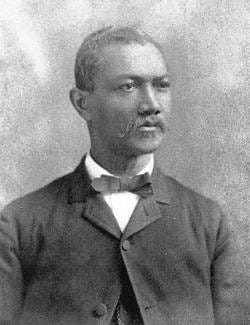
Neither the United States nor Canada was just. Each held a sliver of justice, mostly unintended, and the slivers were never in the same place. What one country had bolted shut, the other had accidentally left open. Out of necessity or desperation, the people who needed an open door would find it. A nation with a neighbor cannot easily convince its people that the arrangement they live under is the only one.
Canada could look south and see the United States raising regiments of Black soldiers and pinning a major’s straps on a Black surgeon. Two Black men served as Black majors in the US Army. No force under British command in Canada had done or would do for another fifty years. The United States could look north and see a medical school that would enroll and graduate a Black barber from Norfolk. In America, Harvard had expelled three Black medical students.
People who moved between Canada and the United States, using whichever sliver was within reach at the time, kept forcing both countries to widen the little they had already granted. One of them was the barber from Norfolk, Virginia. His name was Alexander Thomas Augusta, and this is his story.
The Story Begins in Norfolk, Virginia
Alexander Thomas Augusta was born free in Norfolk, Virginia, in March of 1825. On April 7, 1831, when he was six years old, the Virginia assembly passed an act making it unlawful to teach free Black children to read and write. More laws followed in March 1832, after Nat Turner rose in Southampton County the previous August. This did not stop Alexander from learning to read. He learned it in a barbershop. He went up to Baltimore as a young man and kept at the same trade, because barbering paid and medicine cost, and on the twelfth of January, 1847, he married Mary O. Burgoin of Baltimore. He applied to the medical department at the University of Pennsylvania, and the school refused him and told him his preparation was inadequate, and then one of the men on that same faculty took him on privately, which was a kindness that solved nothing, because a course of private reading does not produce a degree and there was no American school prepared to give him one. He went out to California and earned the money for a schooling he had no way to buy.
New Opportunities in Toronto
Around 1850, Alexander and Mary left America, though no documentation explains how. He entered the medical faculty at Trinity College in Toronto and opened a drugstore on Yonge Street where he studied. He finished his course in 1856 and earned a Bachelor of Medicine at Trinity in 1860. He built a practice in the city, worked at the Toronto House of Industry, and became president of the Provincial Association for the Education and Elevation of the Colored People of Canada. He was in his thirties by then, and he had in his hands the thing two American institutions had refused him, and he was living several hundred miles from anyone he had grown up with, in a country that had given him a profession but had no particular use for what he meant to do with it.
Returning to America, an Educated Man with Experience
Augusta wrote from Toronto to Abraham Lincoln and to Edwin Stanton at the War Department, just six days after the Emancipation Proclamation took effect, on January 7th, 1863. I beg leave to apply to you for an appointment as surgeon to some of the colored regiments, or as physician to some of the depots of freedmen, he wrote, and then he set out his reasons without any ornament on them. I was compelled to leave my native country, and come to this on account of prejudice against color, for the purpose of obtaining a knowledge of my profession; and having accomplished that object, at one of the principal educational institutions of this province, I am now prepared to practice it, and would like to be in a position where I can be of use to my race. The War Department turned him down on two grounds, that he was Black and that he was living under a Crown which had declared its neutrality in the American war, and either ground would have been enough on its own.
He bought a railway ticket. He went to Washington and stood in front of the Army Medical Board and asked the men at the table to examine him, telling them that he had come near a thousand miles at great expense and sacrifice, hoping to be of some use to the country and to my race at this eventful period. They tested him on April 14th, 1863, and he passed. They commissioned him a major, making him the first Black commissioned officer in the United States Army, and for a while he was the highest-ranking Black officer. This put him in a coat with straps on the shoulders in a city where such a coat on such a man was taken as an argument.
Determination and Hard Work
They sent him to the Contraband Hospital, which stood on swampy ground in the northwest of the city between Twelfth and Thirteenth and R and S Streets, in barracks that had been Camp Barker. The people in those wards had walked out of Maryland and Virginia into a capital that abolished slavery in April of 1862. No one had made any arrangements for what would follow. They arrived hungry, and they arrived sick, and a good many of them arrived with smallpox. The city housed them in tents and one-story sheds on wet ground.
Augusta ran the place for six months. He hired his nurses from the camp itself and paid them wages. This was not an ordinary practice, and one of the women he hired was Jane Isabella Saunders, who had come to Washington in 1863 looking for her husband but learned that smallpox had already killed him. Augusta put her to work along with three of her six children beside her. She described the job years afterward. We had to make the beds, and keep the ward clean, besides waiting on the sick, she said. Many a night I had to sit up all night to wait on the sick, giving them medicine or food. Fourteen Black surgeons served the Union in that war, and seven of them worked in that one hospital. This was more than served anywhere else in the country.
The city made its opinion of his commission plain enough. In May of 1863, a crowd caught him in a Baltimore street because he was a Black man wearing an officer’s coat and tore the epaulets off his shoulders. Three men were arrested for it.
He had lived in Baltimore for years and had cut hair on those blocks. On the first of February, 1864, on his way to give evidence at a court-martial, a streetcar conductor in Washington stopped him at the door of the car, and Augusta walked to the courthouse, sat down, and wrote to the judge advocate, Captain C. W. Clippington, to account for his lateness. When I attempted to enter, the conductor pulled me back and told me I must ride on the front, as it was against the rules for colored persons to ride inside. I told him I would not ride on the front, and he said I should not ride at all. He then ejected me from the platform and, at the same time, ordered the driver to go on. I have therefore been compelled to walk the distance in the mud and rain, and have also been delayed in my attendance upon the court. The letter was in the New York and Washington papers, and on February 10th Charles Sumner read it aloud in the Senate and moved that the Committee on the District of Columbia take up the practice of putting Black passengers off the cars. Attorney General Edward Bates treated the whole business as a joke and the senators who pressed it as figures of fun. Despite the mockery, within the year the District’s streetcars were open, thanks to a surgeon with wet boots writing a note about why he was late for work.
He was regimental surgeon of the 7th United States Colored Infantry on October 2nd 1863. Lincoln put him at the head of Freedmen’s Hospital, which was the first time the United States had a Black man running a hospital of any kind. He was breveted lieutenant colonel in March 1865, and mustered out on October 13th 1866. On January, 20th 1865, while he was still in uniform, he wrote to Major General Lew Wallace about being made to sit apart on a train. Every time the country put him where it thought he belonged, he wrote it down and sent it to a man with the power to change it, and he did that while running wards full of people who had been somebody’s property two years earlier.
He went south for the Freedmen’s Bureau and ran Lincoln Hospital in Savannah, then returned to Washington, opened a practice, and took over the smallpox hospital in 1870. On November 8, 1868, he began teaching anatomy in the medical department at Howard University, the first Black man appointed to the faculty of any medical school in the United States. He stayed until July 1877. Howard gave him an honorary doctorate in 1869 and a master’s degree in 1871. On June 9th 1869, he and Charles Burleigh Purvis put their names forward for membership in the Medical Society of the District of Columbia. Both men were qualified, but the society rejected them; two weeks later, it rejected A. W. Tucker on the same grounds, so the three of them founded the National Medical Society of the District of Columbia and admitted physicians without regard to color. This was the one thing the older society had declined to do. In February of 1868, he had testified before a congressional committee about Kate Brown, who was hauled out of a car on the Alexandria, Washington and Georgetown Railroad for sitting where she was not wanted.
Canada and America, Stronger Than Either Country Intended
Canada gave him what America would not, and America gave him what Canada had no way to offer. Both countries were stronger because of him, and neither one intended it that way.
He died at his house in Washington on December 21st, 1890, at sixty-five, and was buried at Arlington National Cemetery in Section 1, Grave 124-C. He was the first Black officer buried in that ground. The stone gives his commissions and his dates. It stands in Virginia, in the state whose assembly had made it a crime to teach him his letters when he was six years old.
On May, 19th 2023, the Army named its medical center at Fort Belvoir for him. It sits about twelve miles down the road from Arlington and about a hundred and eighty miles from the Norfolk barbershop where a boy who was forbidden to read learned how.
An amazing story, Jim, thanks for tying it back to the daily news, ever so gently. We’re like siblings, fated to look out for each other but never happy about it…
The phrasing slivers of justice' hits the nail on the head. It’s striking how Augusta’s wet boots and a simple letter after being thrown off a streetcar directly moved Charles Sumner to press for desegregation in D.C. It shows how systemic change so often turns on an individual’s refusal to quietly accept small indignities.
Do you see Augusta’s cross-border trajectory as an anomaly born of sheer willpower, or was there a broader network of free Black professionals utilizing Canada as a parallel institution during this period?